






MIYAGI SANT JUAN BAUTISTA MUSEUM
Japan’s First Samurai Diplomats to Europe and the Ship that Carried Them
Over 400 years ago, a wooden sailing ship departed from Ishinomaki on a daring voyage across the Pacific Ocean.
The vessel, later known as the “DATE Black Ship(Kurofune)”, was named Sant Juan Bautista.
On board were members of the Keicho Embassy, a diplomatic mission led by the samurai envoy HASEKURA Tsunenaga, who traveled to Europe on behalf of the Sendai domain.
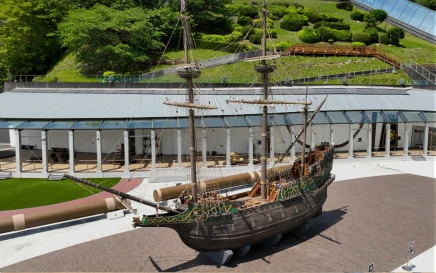
This museum features the world’s only historically accurate 1/4-scale reconstruction of the Sant Juan Bautista.
Here, you can follow the route of their journey and learn about the global circumstances surrounding their mission.
Three Reasons to Visit
Trace Japan’s samurai mission to Europe
-
REASON 1
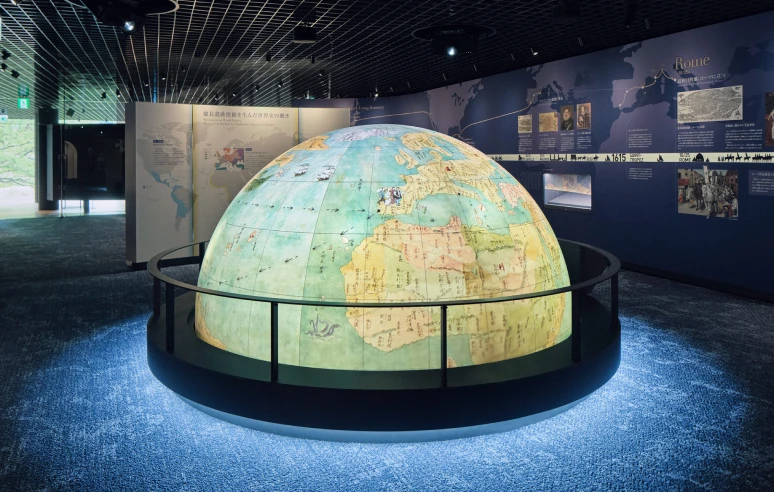
The First Journey
to Europe by Japan's SamuraiLearn about the samurai who set out for Europe 400 years ago.
Through the exhibits, you can understand the purpose of their mission and the scale of their voyage across unfamiliar seas. -
REASON 2
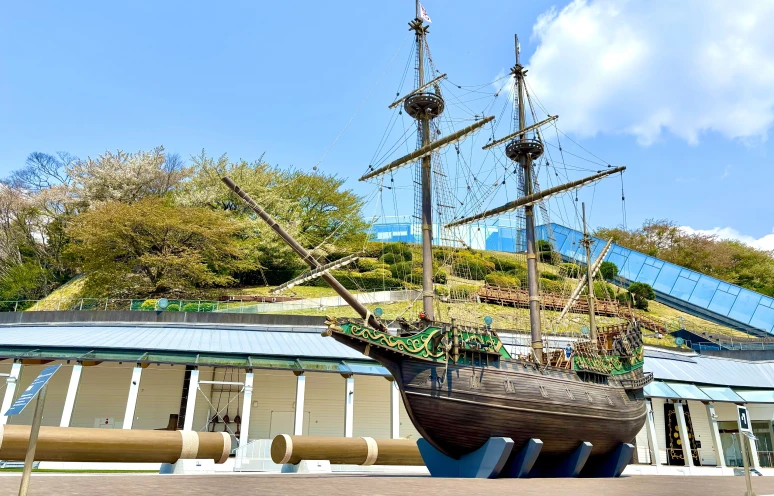
A Meticulously Reconstructed
1/4-Scale ShipThe Sant Juan Bautista is a rare galleon that combined Western shipbuilding techniques with traditional Japanese woodworking.
The reconstruction highlights the craftsmanship and technical skill involved in building the original vessel. -
REASON 3
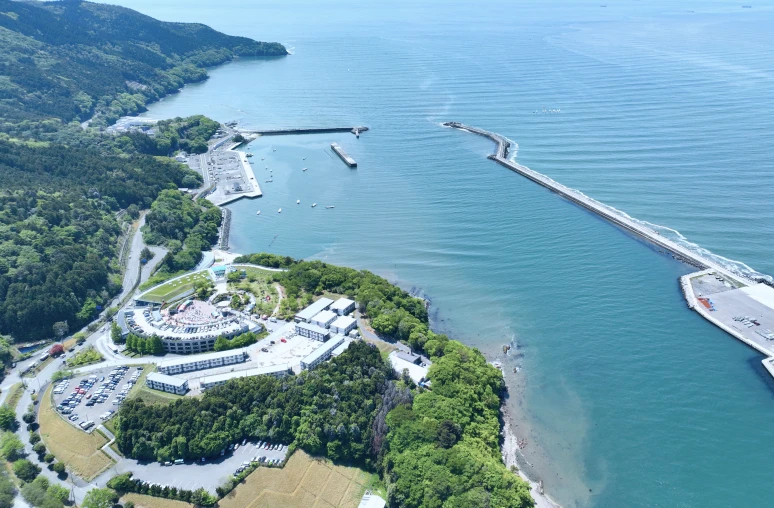
A Scenic View Over the Sea
Where the Samurai's Adventure BeganThe peninsula offers beautiful views of the sea and the area from which the envoys departed, reminiscent of the surrounding landscape at the start of their journey.
Directions
Choose the Transportation Option That Suits Your Travel Plans
- Miyagi Sant Juan Bautista Museum
- 30-2 Aza-Omori, Watanoha, Ishinomaki-shi, Miyagi-ken 986-2135
- Route 1: JR Sendai Station → JR Ishinomaki Station on the JR Senseki Line → JR Watanoha Station → walk/taxi
- From JR Sendai Station, take a train on the JR Senseki Line bound for Ishinomaki for 1 hr 28 min and get off at JR Ishinomaki Station.
From JR Ishinomaki Station, take a train on the JR Ishinomaki Line bound for Onagawa for 10 min and get off at JR Watanoha Station.
Then, walk for 25 min or take a taxi for 5 min to reach the museum.
- Route 2: JR Sendai Station → JR Ishinomaki Station on the JR Senseki Tohoku Line → JR Watanoha Station → walk/taxi
- From JR Sendai Station, take a train on the JR Senseki Tohoku Line bound for Ishinomaki (outbound) for 1 hr and get off at JR Ishinomaki Station.
From JR Ishinomaki Station, take a train on the JR Ishinomaki Line bound for Onagawa for 10 min and get off at JR Watanoha Station.
Then, walk for 25 min or take a taxi for 5 min to reach the museum.
- Route 3: JR Sendai Station → JR Ishinomaki Station on the JR Senseki Line or the JR Senseki Tohoku Line → taxi
- From JR Sendai Station, take a train on the JR Senseki Line bound for Ishinomaki or a train on the JR Senseki Tohoku Line bound for Ishinomaki (outbound) and get off at JR Ishinomaki Station.
- Distance 73 km / Travel time 1 hr 18 min
- Parking available (300 vehicle capacity)
Museum Information
Real-Time Translation System
A real-time translation system is available at the reception desk.
Please feel free to use it for smoother communication.
Opening Hours
9:30 a.m. - 4:30 p.m. *Last entry 30 minutes before closure *Open until 5:30 p.m. in August
Closed
Tuesdays (unless a nat'l holiday) and New Year's holidays (Dec 28-Jan 4)
View CalendarAdmission Fees
- General Admission Fee
- ¥500
- Group Admission Fee:(for groups of 20 or more)
- ¥400
- Admission free for Under 15s and junior or
senior high school students. - No charge
Cashless Payment
The following payment methods are accepted for admission fees:
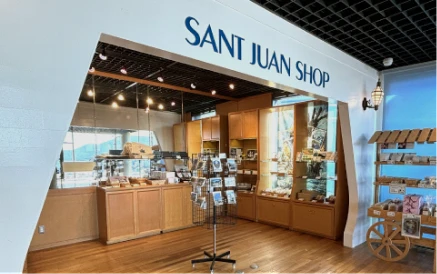
Please note that payment methods at the museum shop may differ.
- Credit Cards
- VISA / Mastercard / JCB / American Express / Diners Club / UnionPay / Nissenren Card
- Electronic Money
- Transportation IC Cards / WAON / Rakuten Edy / nanaco / iD / QuicPay
- QR Code Payments
- PayPay / Rakuten Pay / au PAY / Merpay / Alipay / WeChat Pay / Bank Pay / UnionPay / d Payment
Barrier-free info
 Accsessible Restroom
 Wheelchair Rental
 Wheelchair Lift
 Accessible Route
 Baby Changing Station
 Baby Buggy Rental
 Nursing Room
Wheelchair users:
Use the elevator from the parking to the Sant Juan Hall. Wheelchairs are also available to rent.
For visitors with infants:
You can use a diaper changing table, rental baby stroller, and nursing room.
Guidelines for a Pleasant Visit
To ensure a comfortable experience for all visitors, please follow the posted guidelines.
 Please do not touch the exhibits
 Please use pencils when taking notes in the exhibition rooms
 Photography is not allowed for exhibits with a No Photography sign
 Eating and drinking are not allowed except in designated areas
 Smoking is not allowed
Contact info
Please submit inquiries in English via the contact form.
*Depending on the nature of your inquiry, it may take us some time to respond.
Calendar
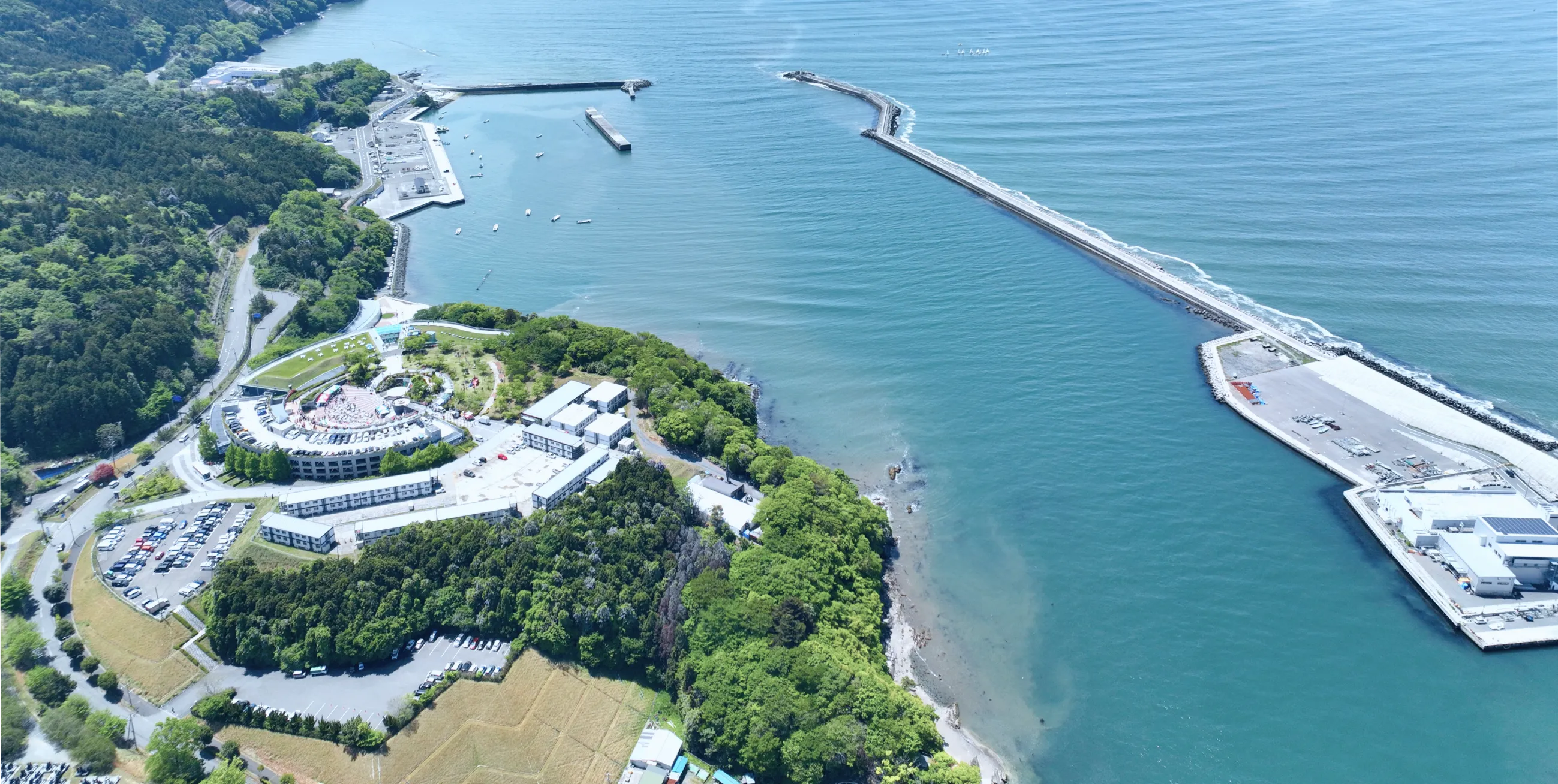
What Was the Keicho Embassy Japanese Diplomatic Mission to Europe?
About 400 years ago, DATE Masamune, the feudal lord of the Sendai region in northeastern Japan, initiated a diplomatic mission aimed at establishing direct trade with Mexico.
He dispatched the Keicho Embassy, led by his retainer HASEKURA Tsunenaga, as an official delegation to Europe.
In 1613, the mission crossed the Pacific aboard the Western-style sailing ship Sant Juan Bautista, built in DATE Masamune’s domain.
They reached Mexico and then Spain, where they were granted an audience with King Philip III.
The delegation continued to Rome and met Pope Paul V, conducting formal diplomatic negotiations—an achievement unprecedented in Japan at the time.
However, during their years abroad, Japan underwent a major policy shift: the shogunate imposed a strict ban on Christianity.
As a result, the proposed trade agreements were never realized, and after a seven-year journey, HASEKURA returned to Sendai.

Facility Guide
Learn More from the Exhibits
Scan the QR codes in the exhibition area to access the English guide.
-
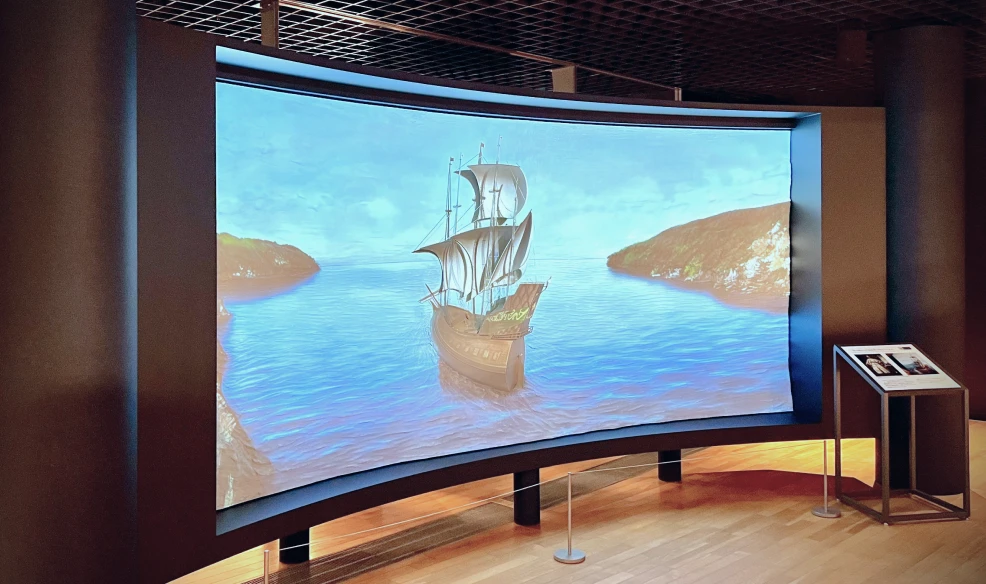
Setting sail
Set sail on the high seas with Tsunenaga! Realistic sounds and visuals recreate the scene of the ship departing from the modern-day Tsukinoura area of Ishinomaki.
-
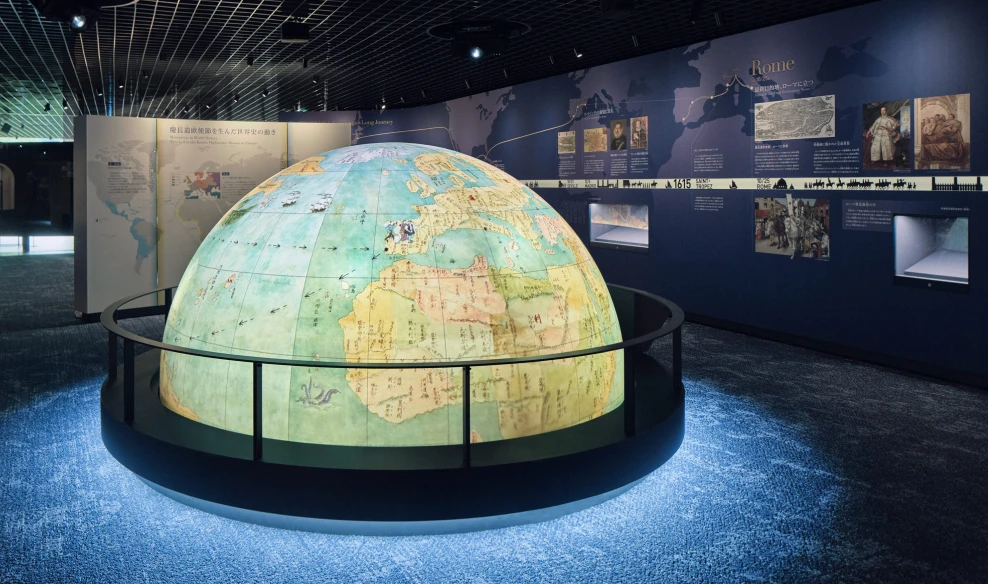
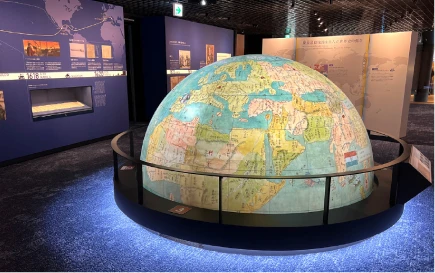
Globe of All Nations on Earth
Set sail on the high seas with Tsunenaga! Realistic sounds and visuals recreate the scene of the ship departing from the modern-day Tsukinoura area of Ishinomaki.
-
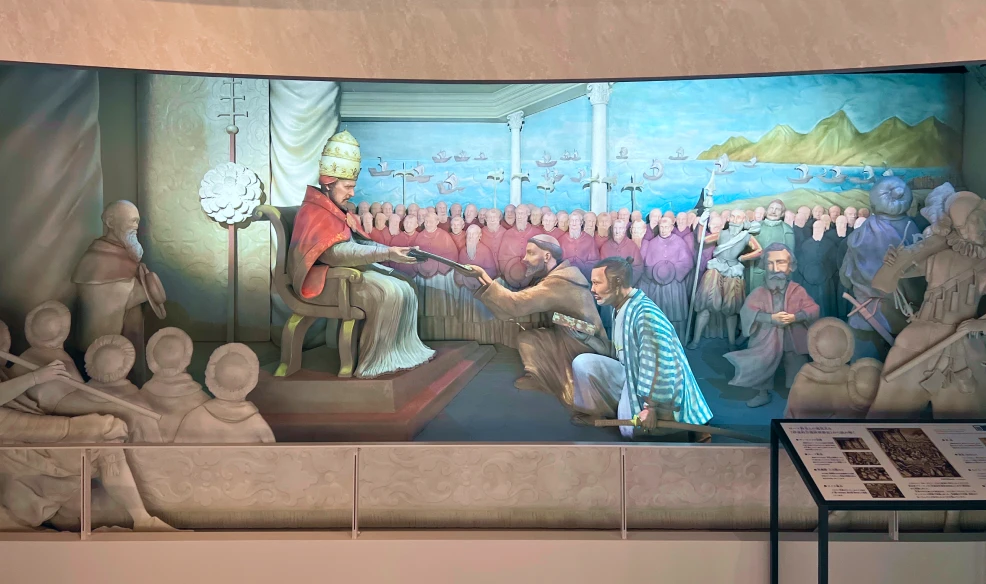
Audience with the Pope
A detailed, three-dimensional relief recreates the audience the Pope granted to HASEKURA Tsunenaga. The illumination of the colorful image provides a sense of the mood during this moment in history.
-
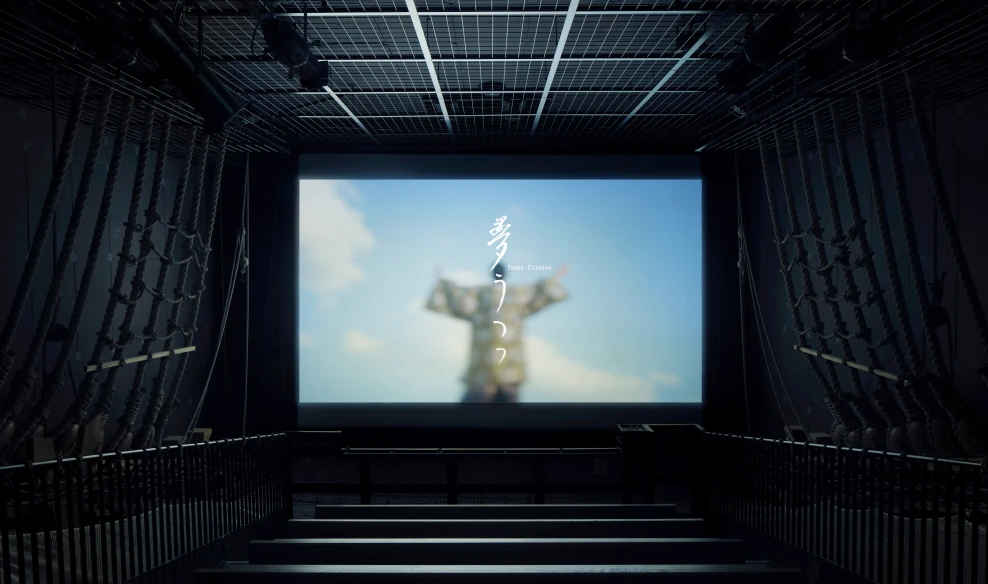
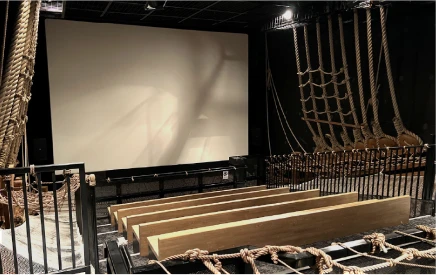
Film Theatre- "Yume-Utsutsu"
Experience the story of DATE Masamune and HASEKURA Tsunenaga on the big screen in this 22-minute short film. The powerful images combining animation, live-action, and computer graphics are a must-see!
- An English-subtitled version of the theater program is available.
- Booklets in various languages are provided.
-
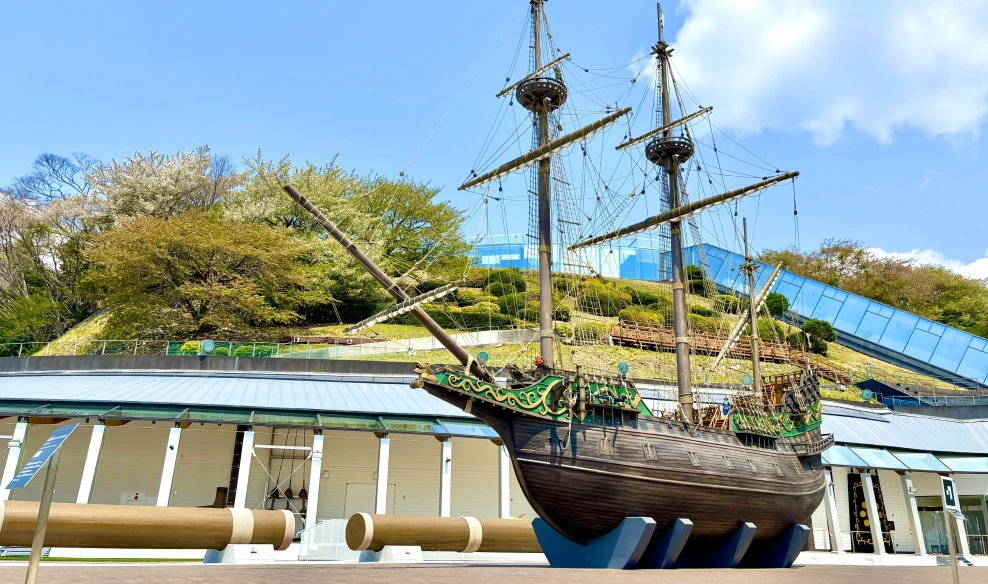
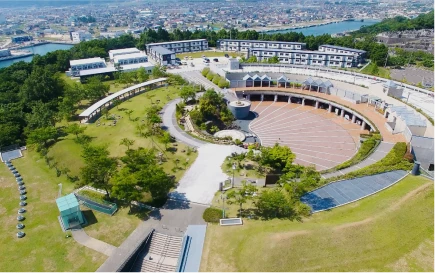
Outdoor Plaza
The dog pool, where the wooden replica ship was on display before the renovation, is now a plaza with a 1/4 scale replica of the ship on display. Make sure you come view this ship that HASEKURA Tsunenaga and his crew rode across the open sea.
-
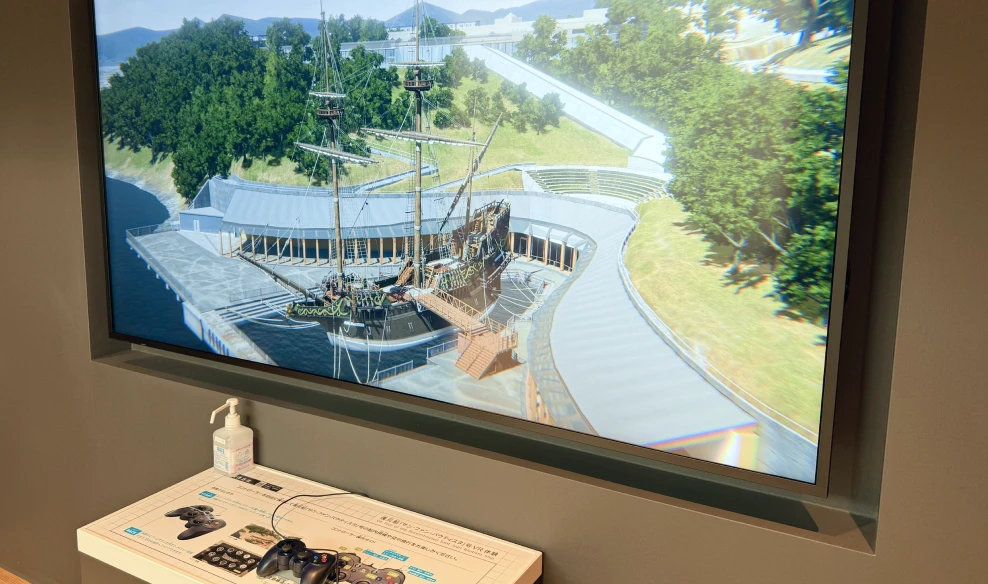
VR Tour of the Reconstructed Sant Juan Bautista Ship
VR Experience
With VR, you can freely explore the reconstructed Sant Juan Bautista.
The detailed virtual interior allows you to learn how sailors lived and worked aboard the ship. -
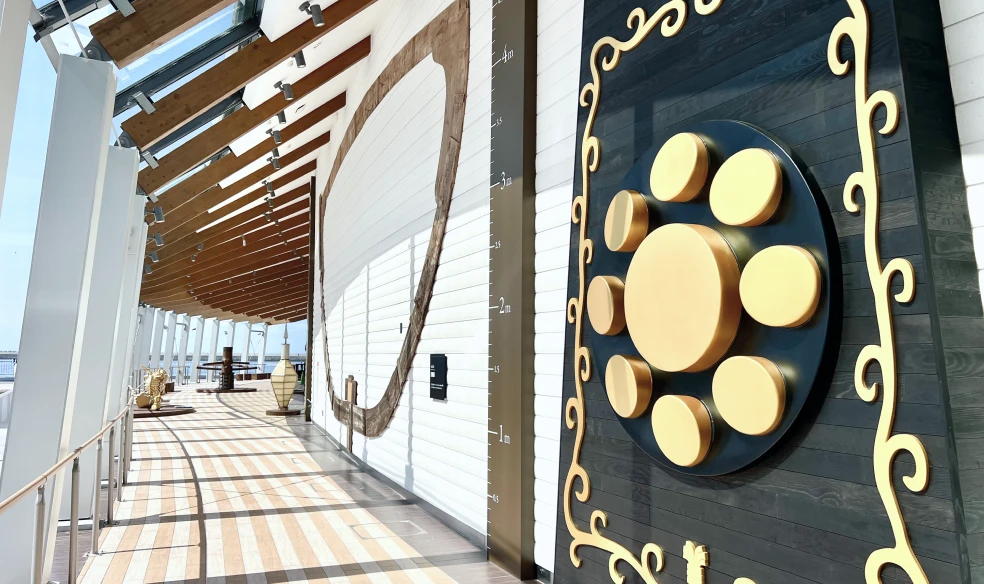
Reconstructed Sant Juan Bautista Ship Parts
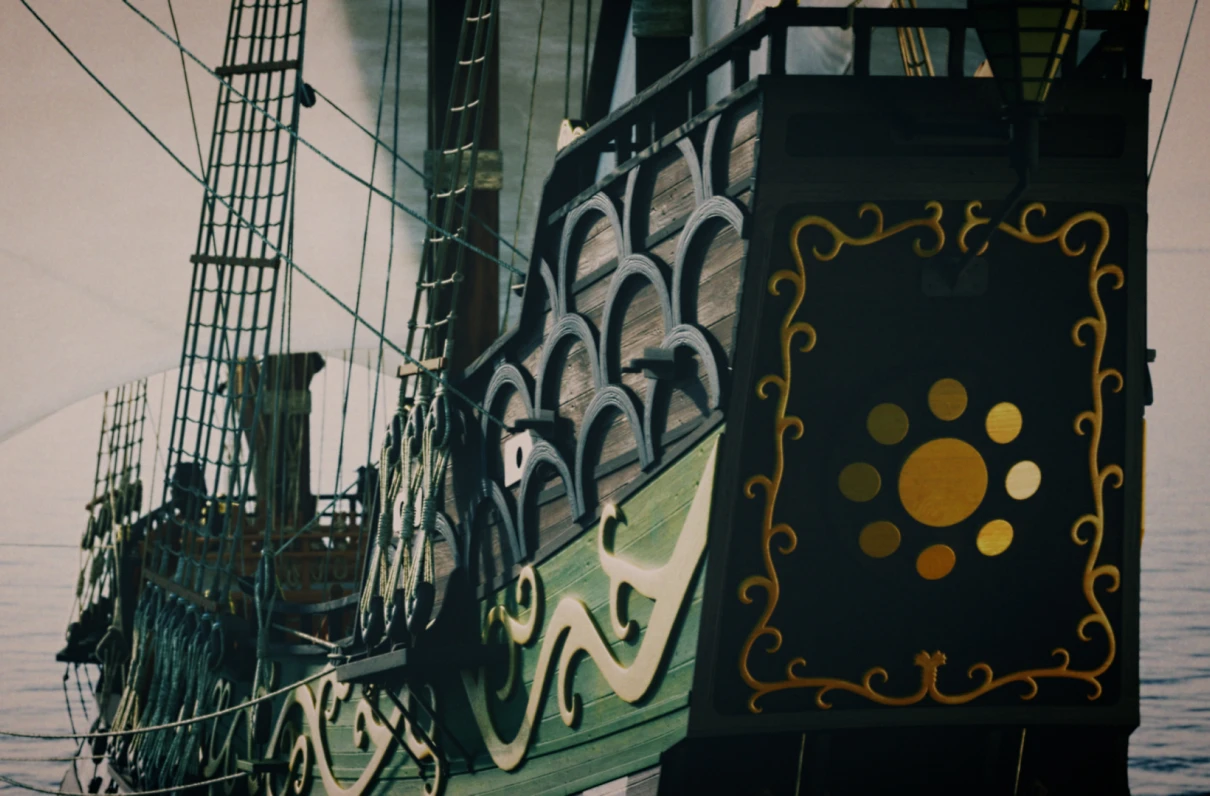
View realistic reproduction of parts from the galleon. The dragon figurehead and the Kuyo crest are impressive sights! Get a close-up look at these ornate decorations.
-
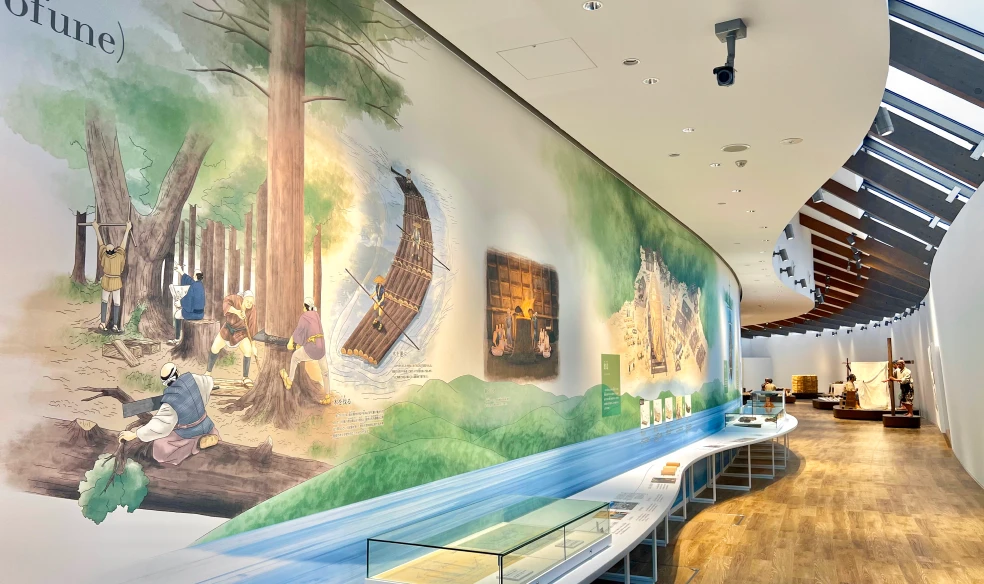
The Story of the DATE Black Ship
Large illustrations clearly and thoroughly explain the process of constructing the galleon, life on board, and navigation techniques. Step into this world at the VR corner, where you can explore the galleon's interior!
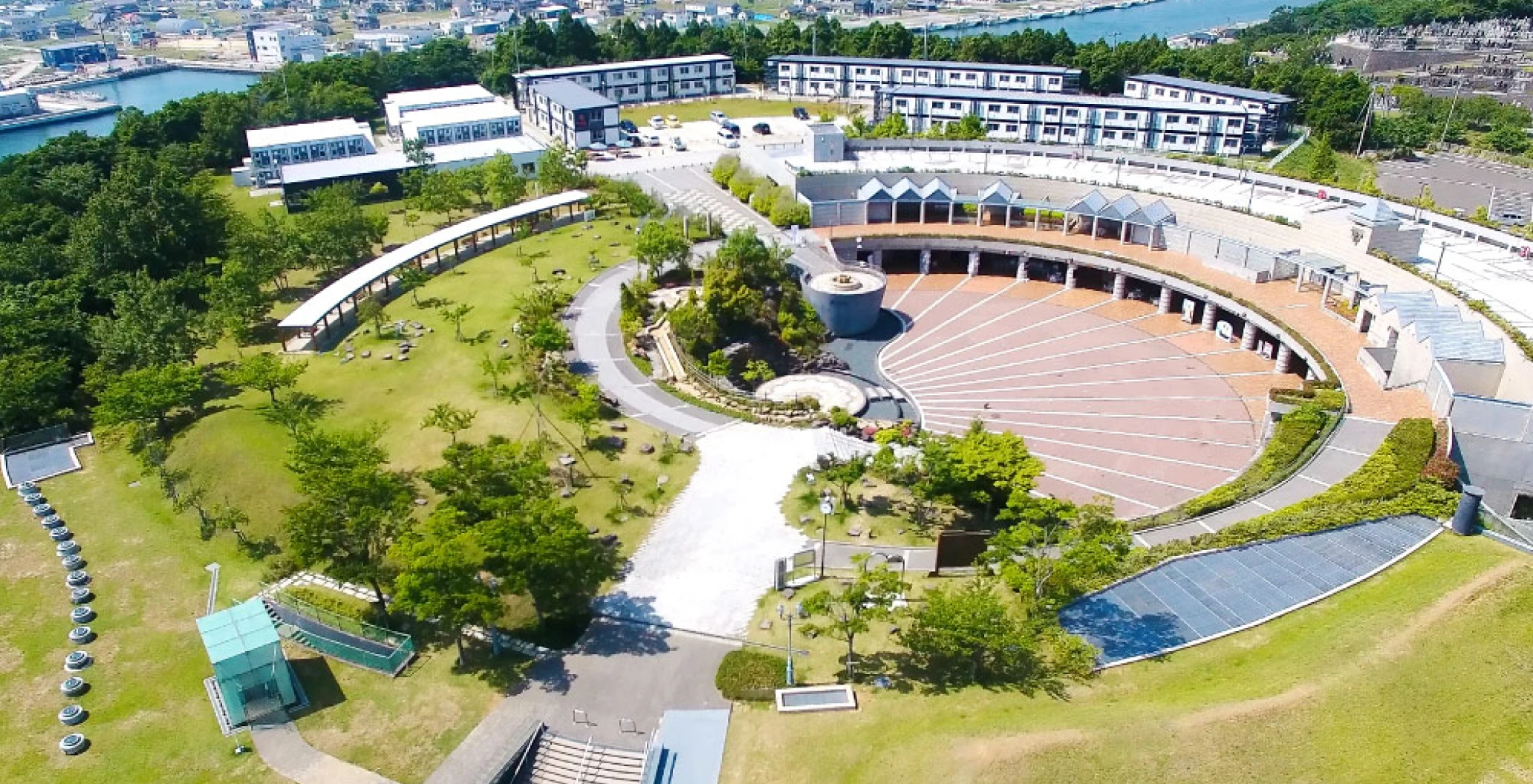
Ishinomaki City Sant Juan Bautista Park (or simply Sant Juan Park) is next to the Sant Juan Museum. It was created to commemorate the historic achievements of the Keicho Mission to Europe, as well as to contribute to cultural activities involving city residents and to provide them with a place for recreation. At Sant Juan Plaza, which also serves as an event venue, you'll find playground equipment, a grassy lawn, and places to relax.
-
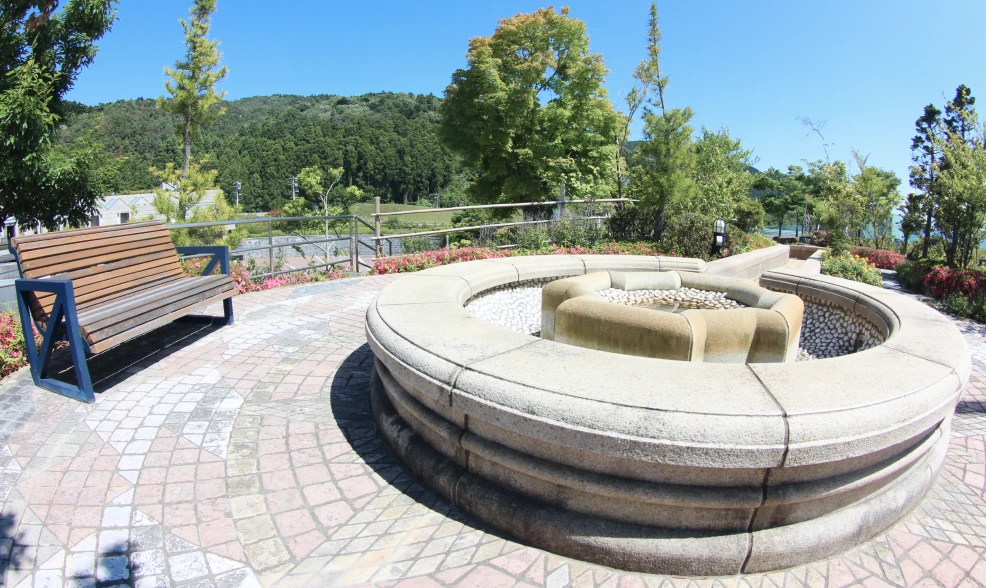
Roman-style Garden
-
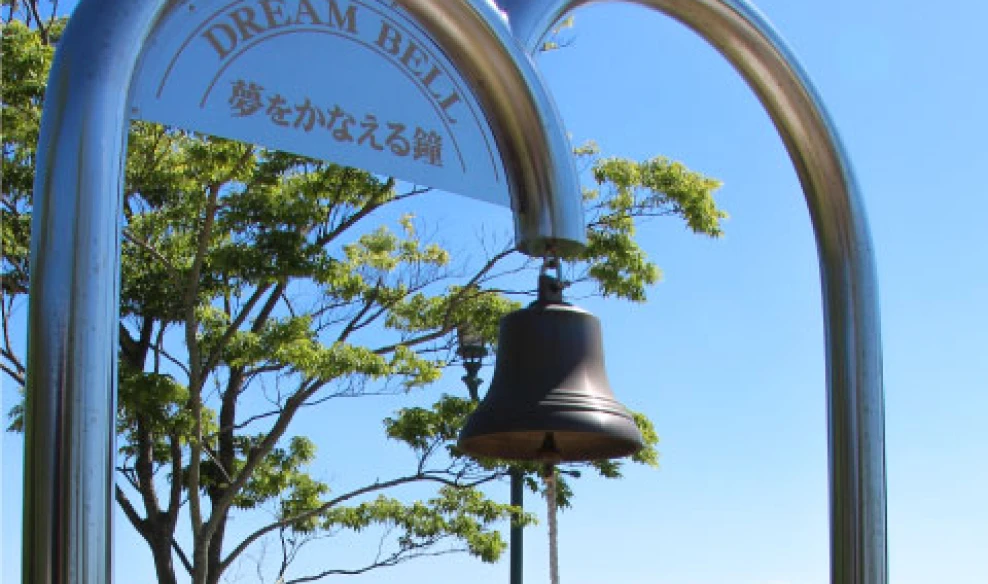
Dream Bell
-
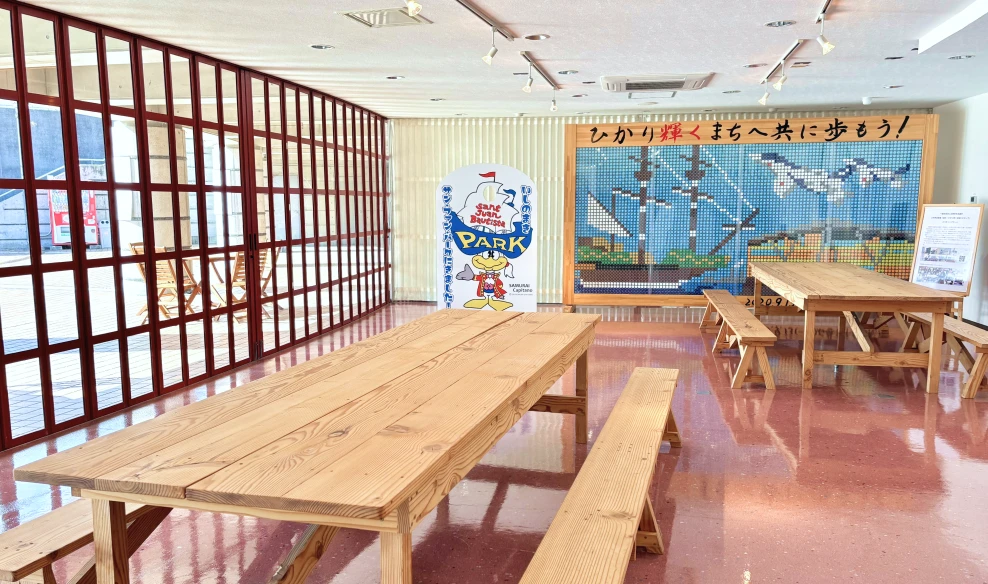
Rest Area
The indoor space is where you can pick up pamphlets about the land spanning the Sanriku region and the Ishinomaki area, as well as the Oshika Peninsula. You can also receive sightseeing information from the staff. There is a break space where you can buy a drink from a vending machine and sit down for some food and beverages. Hours: 9 a.m. to 5 p.m.
-
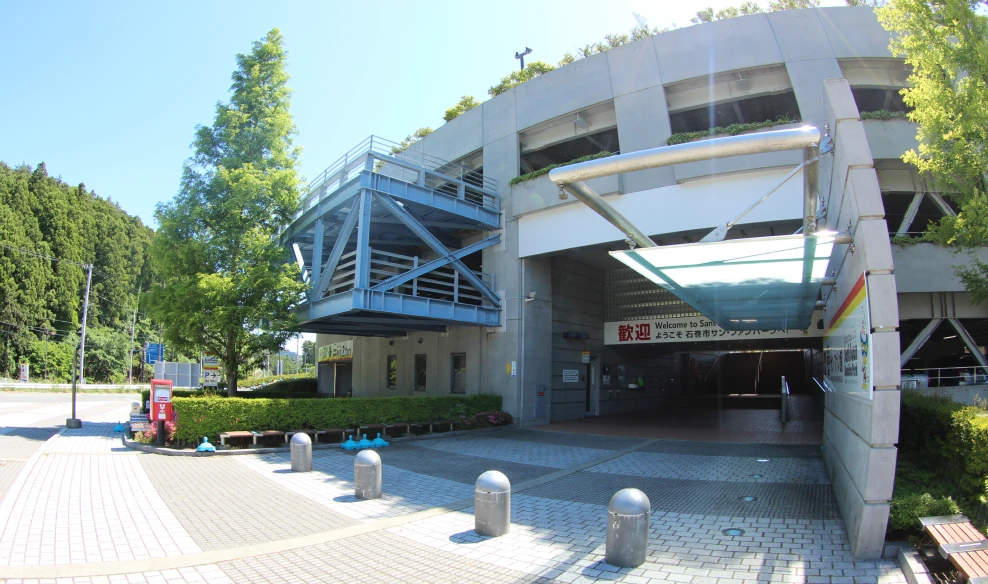
Sant Juan Park Parking Garage
Hours: 9 a.m. to 9 p.m. (The park is always open.)
Parking spaces: 310 for regular vehicles (up to 2.1 meters tall) | adjacent large vehicle and bicycle/motorcycle parking